The Hormones Behind the Chaos: What Estrogen, Progesterone, and Cortisol Are Doing to Your Brain
If you have been living with perimenopause brain fog and wondering why your focus, memory, and emotional steadiness feel suddenly unreliable, this episode is for you. Today on The Healthy Life Approach, we go beneath the surface of last week’s conversation and into the biology behind it, including how perimenopause hormones may be affecting your brain. Because when you understand what is actually driving the changes in your brain, everything starts to make more sense.
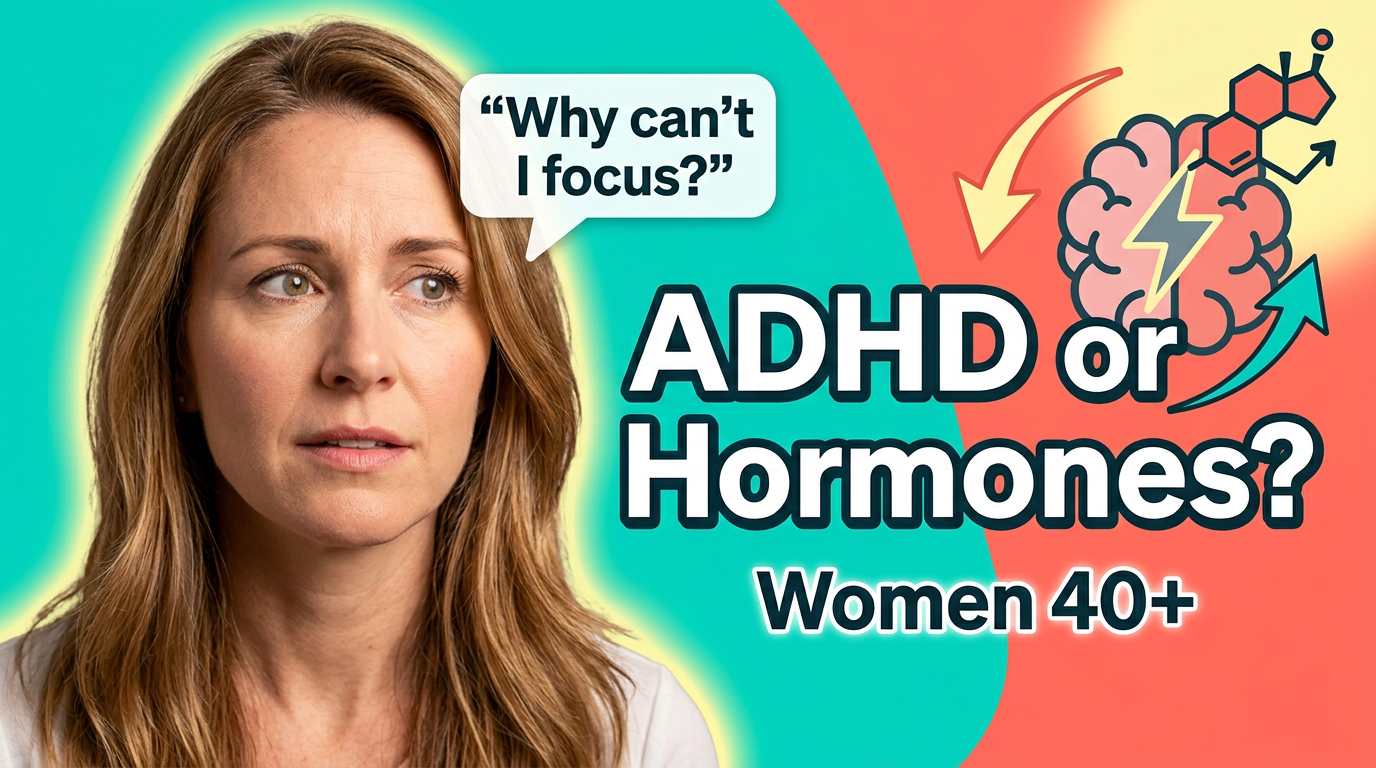
We talk a lot about hormones in the context of hot flashes and cycle changes. However, the real story is what those same hormones are doing inside your brain every single day. Estrogen, progesterone, and cortisol each play a distinct role in how well you can focus, regulate your emotions, and get things done. As they shift in perimenopause, the effects on attention and cognitive clarity can be significant, and in many cases, they can look a lot like ADHD.
This episode also explores something that does not get nearly enough airtime: the idea that some women are neurologically more sensitive to hormonal shifts than others. So if you have always felt hit harder by hormonal changes than those around you, this conversation will give you language for that experience. Furthermore, we cover what labs and data points you can actually discuss with your provider to start getting real answers, rather than just a shrug and a suggestion to try harder.
Key Takeaways from This Episode
- Estrogen is neuroactive, meaning it directly supports the brain chemicals that drive focus, motivation, and follow-through. When estrogen fluctuates in perimenopause, dopamine signaling in the prefrontal cortex can weaken, and executive function often suffers as a result.
- Progesterone converts into a calming brain compound that supports emotional regulation and stress recovery. As progesterone declines, that buffer thins out, which can increase emotional reactivity, anxiety, and the feeling of being unable to settle down.
- Some women are especially sensitive to shifts in this hormonal pathway. If you have a history of intense PMS, postpartum mood challenges, or a particularly rough perimenopause transition, that sensitivity may be part of your individual biology.
- Chronic stress and high cortisol put additional pressure on the prefrontal cortex, which is the same brain region already affected by hormonal shifts. Together, these factors can push an already-taxed system into higher alert and lower function.
- You can use lab testing strategically. Talking with your provider about estradiol, progesterone, FSH, fasting insulin, hs-CRP, thyroid panels, and iron or ferritin levels can help you identify what is mimicking or amplifying your symptoms.
- HRV trends from a wearable device can offer useful context for provider conversations, helping to show that cognitive changes are a whole-system issue rather than a personal shortcoming.
What We Cover in This Episode
Why Estrogen Is a Brain Hormone, Not Just a Reproductive One
Most of us grew up thinking of estrogen as a reproductive hormone. However, your brain treats it very differently. Estrogen is neuroactive, and one of its most important roles is supporting the neurotransmitter systems involved in attention and motivation. Dopamine, in particular, depends on estrogen for healthy function in the prefrontal cortex, the part of your brain that handles planning, follow-through, and staying on task.
When estrogen does not just decline but swings unpredictably, as it does in perimenopause, dopamine loses a key support structure. That is often the moment when women who have always been organized and capable start missing appointments, losing words mid-sentence, and feeling scattered in a way that feels brand new. It is not a personality change. It is a shift in brain chemistry, and perimenopause hormones and brain fog are closely connected as a result.
The Role of Progesterone and Why Some Women Are Hit Harder
Progesterone gets far less attention in these conversations, but it matters enormously. It converts into a compound in the brain that activates calming receptor systems, essentially acting as your brain’s downshift button. When progesterone levels fall, that calming effect diminishes. For women who already have traits that require more effort to regulate emotions or manage stress, losing that buffer can feel dramatic.
Beyond the general decline, research suggests that some women are more sensitive to shifts in this hormonal pathway. This pattern has shown up in connection with PMDD, postpartum mood changes, and the intensity of psychiatric symptoms during perimenopause. If hormonal transitions have always hit you harder than expected, that sensitivity is worth naming and discussing with your provider.
How Cortisol Amplifies Everything
Stress adds another layer. Chronic high cortisol directly interferes with the prefrontal cortex, which is the same brain region already under pressure from hormonal shifts. So if estrogen changes weaken attention support and progesterone changes remove the calm buffer, elevated cortisol can push the entire system further into a high-alert, low-functioning state.
For many women in midlife, the external load is also at its peak. Career demands, family logistics, aging parents, and major life transitions are all happening at the same time as this internal hormonal remodel. That combination can feel like collapse, even for women who were managing everything just fine before. It was not weakness. It was too much pressure on the same circuitry at once.
What You Can Actually Test and Track
While you cannot diagnose attention issues through a blood panel, you can use data to clarify what is driving or amplifying your symptoms. This episode covers several labs worth discussing with your provider, including estradiol, progesterone, FSH, fasting insulin, hs-CRP, a full thyroid panel, and iron or ferritin levels. Each one can reveal a different piece of the picture. Additionally, HRV data from a wearable device can offer supporting context that helps frame cognitive changes as a whole-body issue during provider visits.
Resources and Links Mentioned
- The Healthy Life Approach Podcast
- Subscribe on Apple Podcasts
- Book Kristen to Speak
- Follow on Instagram
Products I Recommend
These are tools and products I personally use and trust. If you purchase through my links, I may earn a small commission at no extra cost to you, which helps keep this show running.
- 🌿 Special discount on supplements and wellness products at FullScript https://us.fullscript.com/welcome/healthylifeapproach
- 🩸 Test your biomarkers and get $25 off membership with Function Health https://my.functionhealth.com/signup?code=KBEASLEY10&_saasquatch=KBEASLEY10&d=GIVE50
- 🧠 Brain training and meditation at home https://braintap.com/membership-and-headset/?afmc=6xz&utm_campaign=6xz&utm_source=leaddyno&utm_medium=affiliate
- ❄️ Sleep cooler tonight (special discount) https://checkout.sleep.me/KRISTEN23194
- ☀️ Infrared sauna therapy (special discount) https://share.sunlighten.com/KristenBeasley
- 🔴 Full spectrum light therapy at home https://solshine.org/collections/frontpage?ref=nmwdhori
- ✨ Sauna blanket and red light wellness (use code HLA15 for 15% off) https://www.awin1.com/cread.php?awinmid=86123&awinaffid=1753147
- 💡 Gamma light for brain health https://beacon40.com/shop?_ef_transaction_id=&oid=3&affid=51
- 🌙 Better sleep starts here (special discount) https://sleepdoctor.sjv.io/c/3450471/1756592/20009
- 💓 Vagus nerve stimulation for HRV and recovery (special discount) https://pulsetto.sjv.io/HealthyLife
Enjoyed This Episode?
If this episode helped something click, share it with a woman who is up late searching for answers about her brain. You can support the show by subscribing on Apple Podcasts or Spotify, leaving a review, and following along on Instagram for weekly brain health content. Every subscribe and share helps more women in midlife find this community and get the context they deserve. Next Friday brings even more clarity, and I am so glad you are here for it.
Disclaimer
Kristen Beasley is a health coach, not a licensed medical professional. This podcast is for education and informational purposes only and is not medical advice, diagnosis, or treatment. Please talk with your physician or a qualified healthcare provider about your personal situation. Always vet health information carefully, especially when considering new treatments or supplements. This podcast and show notes may include affiliate links. If you purchase through those links, Kristen may earn a commission at no extra cost to you, which helps support the show. As an Amazon Associate, she earns from qualifying purchases.