ADHD or Perimenopause? Why It’s Hard to Tell
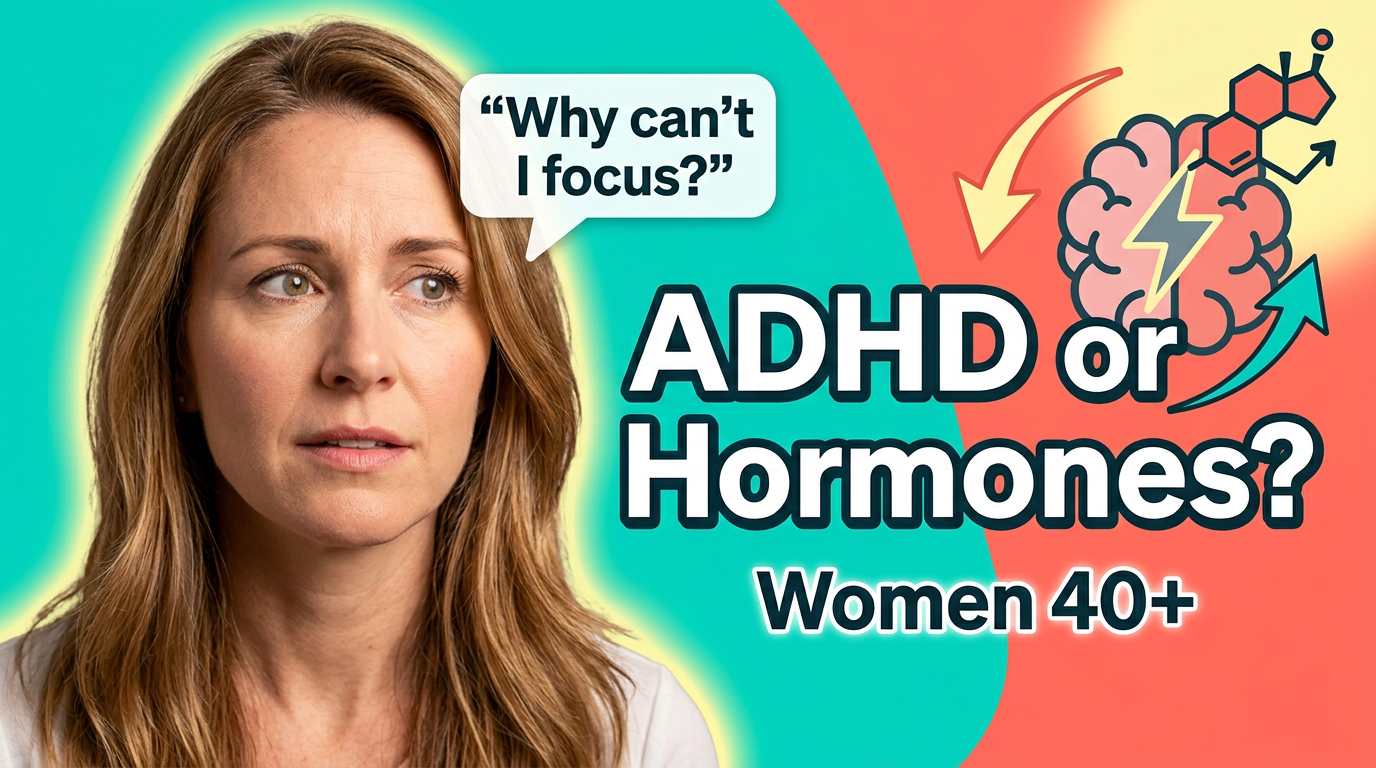
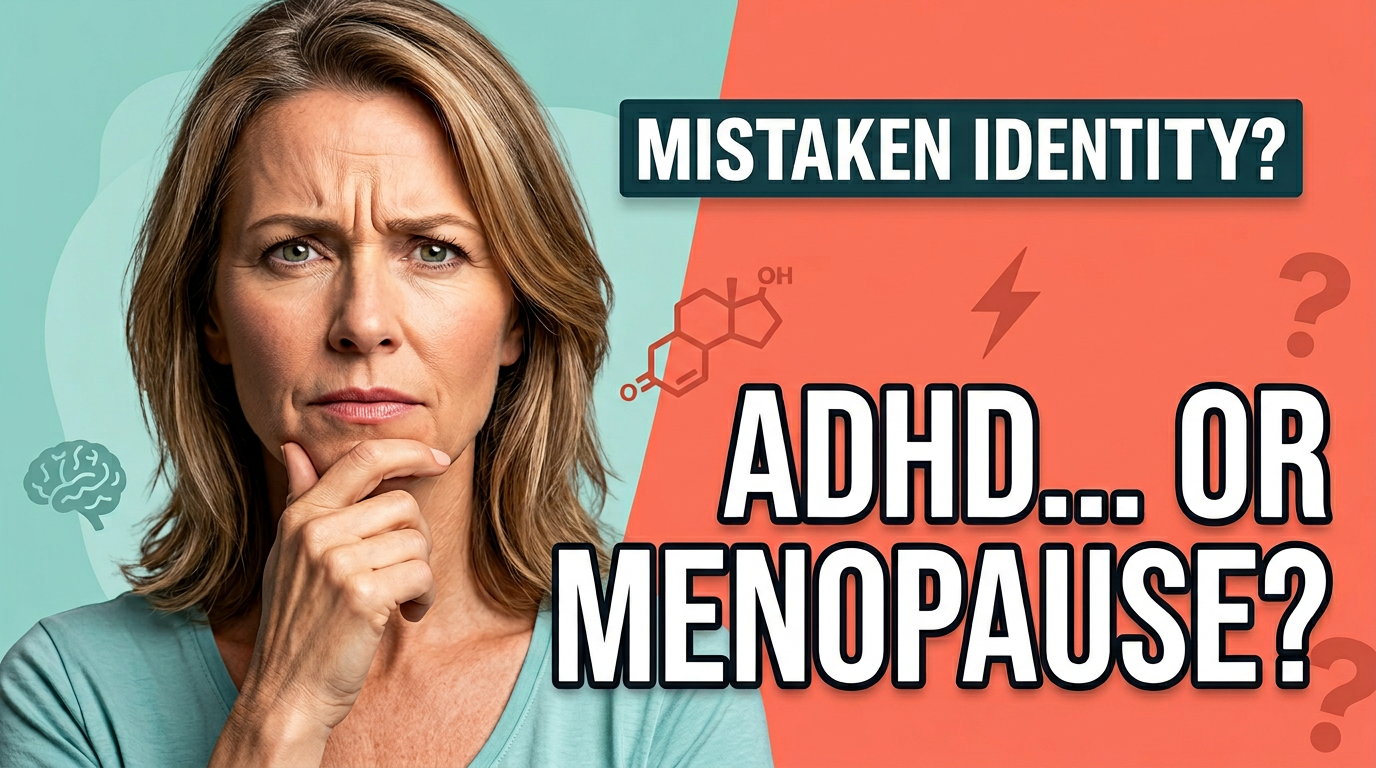
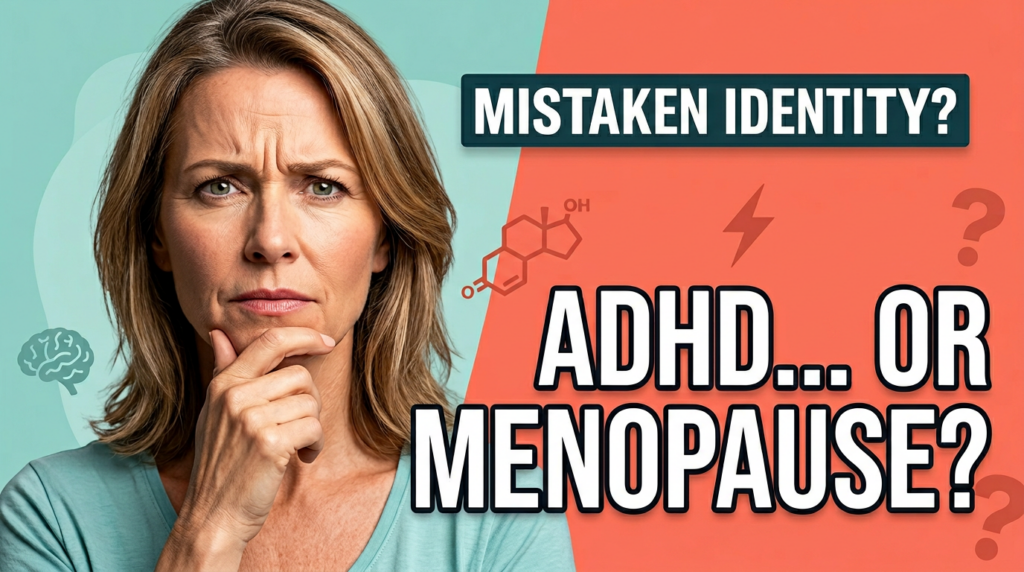
Is it ADHD or Perimenopause? If you have ever found yourself wondering whether your brain fog, scattered focus, and emotional overwhelm are signs of ADHD vs perimenopause, you are not alone. So many women in midlife are asking this exact question right now, and this episode is where we start unpacking it together. Today, we are kicking off a brand-new Friday Focus mini-series, and the ADHD vs perimenopause conversation is one I have been looking forward to having with you for a long time.
The reason this question comes up so often is not because women are overthinking it. It is because the two conditions share a surprisingly similar symptom picture. Both can disrupt your ability to focus, follow through, manage time, regulate emotions, and stay mentally organized. Because both ADHD and perimenopause affect overlapping brain chemistry, the symptoms can look nearly identical from the outside, and even from the inside. Understanding why that overlap exists is the first step toward getting real answers.
Furthermore, there is a layer of history here that matters. For decades, ADHD was primarily studied in young boys, which means many women were never identified. Instead, they developed elaborate coping strategies that worked beautifully, until midlife. As hormones begin to shift in perimenopause, those same strategies can start to break down. Suddenly, a woman who always had everything under control feels like she is losing her edge. This episode explores that pattern honestly, without fear or alarm, and gives you better questions to start asking.
Key Takeaways from This Episode
- ADHD and perimenopause both affect executive function, which is your brain’s ability to plan, prioritize, focus, and regulate emotions, making the two conditions easy to confuse.
- Estrogen plays a direct role in supporting dopamine and norepinephrine, the neurotransmitters central to attention and motivation. As estrogen fluctuates in perimenopause, it can create or amplify ADHD-like symptoms.
- Many women with undiagnosed ADHD compensated successfully for years. Perimenopause can unmask that underlying pattern by reducing the brain resources those coping strategies depended on.
- Looking backward at your history is one of the most useful clues. ADHD is lifelong, even when it goes unrecognized. Symptoms that are truly new in your 40s are more likely driven by hormonal changes.
- Tracking cyclical patterns in your symptoms can be revealing. Perimenopause often brings waves of brain fog that track with hormonal fluctuations, while ADHD-related challenges tend to be more consistent over time.
- The answer may be both, and that is not a failure. Getting the right picture matters because the most effective support depends on understanding what is actually driving your experience.
What We Cover in This Episode
Why the ADHD vs Perimenopause Question Is So Common Right Now
There is a reason this topic has become such a frequent conversation in midlife. Part of it is history: ADHD research focused on boys for decades, which means women who showed quieter, more internalized symptoms were often overlooked. Part of it is compensation: women are often skilled at building systems, staying organized, and pushing through cognitive difficulty. Those strategies tend to work well until they do not.
When perimenopause arrives, and hormones begin to fluctuate, the brain loses some of the support it relied on. Estrogen, in particular, helps regulate the neurotransmitter systems tied to attention and motivation. As estrogen drops and swings, women can experience a cascade of symptoms that feel sudden and alarming, even though many of them have biological roots that are explainable.
The Brain Chemistry Behind the Overlap
Both ADHD and perimenopause involve the same neurotransmitter systems: dopamine and norepinephrine. These chemicals drive focus, motivation, task completion, and emotional regulation. In ADHD, these systems are structurally affected. In perimenopause, hormonal changes disrupt their function. That is why the day-to-day experience can feel so similar, even though the underlying cause is different.
Additionally, if you already have ADHD, the hormonal shifts of perimenopause can feel like someone turned the difficulty level up significantly. The same challenges you managed before become harder to manage without the estrogen support your brain was quietly depending on.
Starting to Gather Clues
This episode offers three useful starting points for women trying to make sense of their experience. First, look backward. Because ADHD is a lifelong condition, signs often show up in earlier decades, even if they were subtle or unrecognized. Second, track patterns. Perimenopause-driven symptoms often come in waves that correspond to hormonal fluctuations, while ADHD-related challenges tend to be steadier over time. Third, hold space for both. Many women discover that perimenopause has unmasked an underlying ADHD pattern that was always there. That recognition is not frightening; it is the beginning of clarity.
Ultimately, the goal is not to arrive at a label. The goal is to understand what is happening in your brain so you can choose support that actually matches your experience. Whether the driver is hormonal, neurodevelopmental, or a combination, real options exist. Next week, we go deeper into the hormone-brain connection and explore how estrogen, progesterone, and dopamine interact throughout the perimenopause transition.
Products I Recommend
These are tools and products I personally use and believe in. If you purchase through my links, I may earn a small commission at no extra cost to you, which helps keep the show going.
- 🌿 Special discount on supplements and wellness products at FullScript https://us.fullscript.com/welcome/healthylifeapproach
- 🩸 Test your biomarkers and get $25 off membership with Function Health https://my.functionhealth.com/signup?code=KBEASLEY10&_saasquatch=KBEASLEY10&d=GIVE50
- 🧠 Brain training and meditation at home https://braintap.com/membership-and-headset/?afmc=6xz&utm_campaign=6xz&utm_source=leaddyno&utm_medium=affiliate
- ❄️ Sleep cooler tonight (special discount) https://checkout.sleep.me/KRISTEN23194
- ☀️ Infrared sauna therapy (special discount) https://share.sunlighten.com/KristenBeasley
- 🔴 Full spectrum light therapy at home https://solshine.org/collections/frontpage?ref=nmwdhori
- ✨ Sauna blanket and red light wellness (use code HLA15 for 15% off) https://www.awin1.com/cread.php?awinmid=86123&awinaffid=1753147
- 💡 Gamma light for brain health https://beacon40.com/shop?_ef_transaction_id=&oid=3&affid=51
- 🌙 Better sleep starts here (special discount) https://sleepdoctor.sjv.io/c/3450471/1756592/20009
- 💓 Vagus nerve stimulation for HRV and recovery (special discount) https://pulsetto.sjv.io/HealthyLife
Enjoyed This Episode?
If this episode hit close to home, share it with a friend who has been quietly wondering the same things about her own brain. You can also support the show by subscribing on Apple Podcasts or Spotify, leaving a review, and following along on Instagram for weekly brain health strategies and behind-the-scenes content. Every share, subscribe, and review helps more women find this community, and that matters more than you know. More clarity is coming next Friday, and I am glad you are here for it.
Disclaimer
Kristen Beasley is a health coach, not a licensed medical professional. This podcast is for education and informational purposes only and is not medical advice, diagnosis, or treatment. Please talk with your physician or a qualified healthcare provider about your personal situation. Always vet health information carefully, especially when considering new treatments or supplements. This podcast and show notes may include affiliate links. If you purchase through those links, Kristen may earn a commission at no extra cost to you, which helps support the show. As an Amazon Associate, she earns from qualifying purchases.